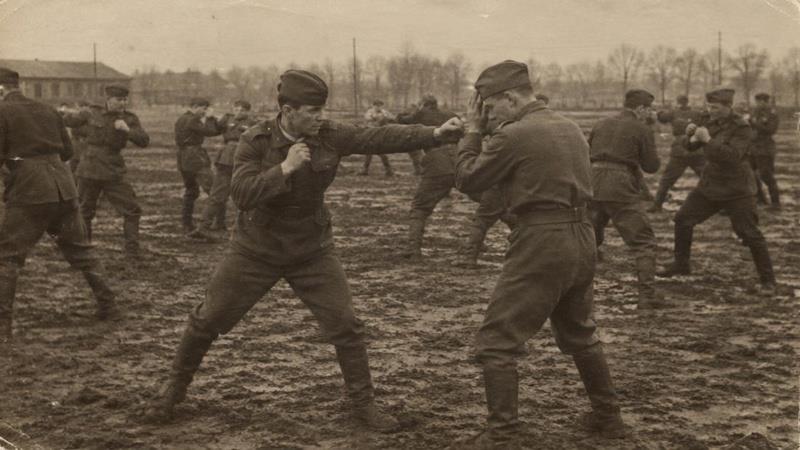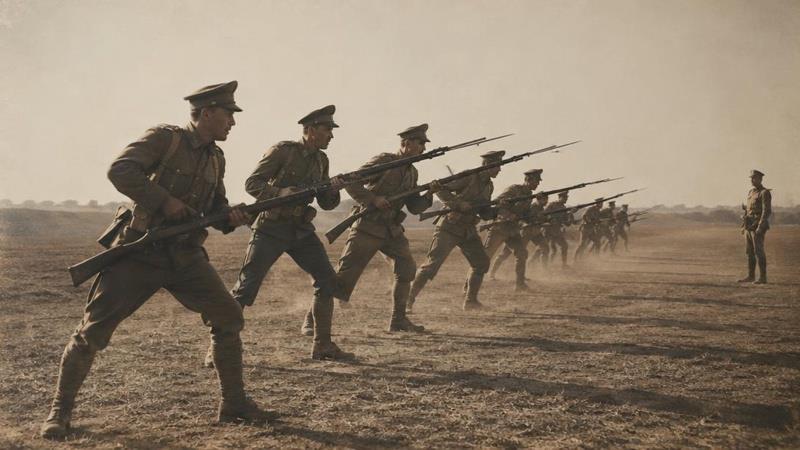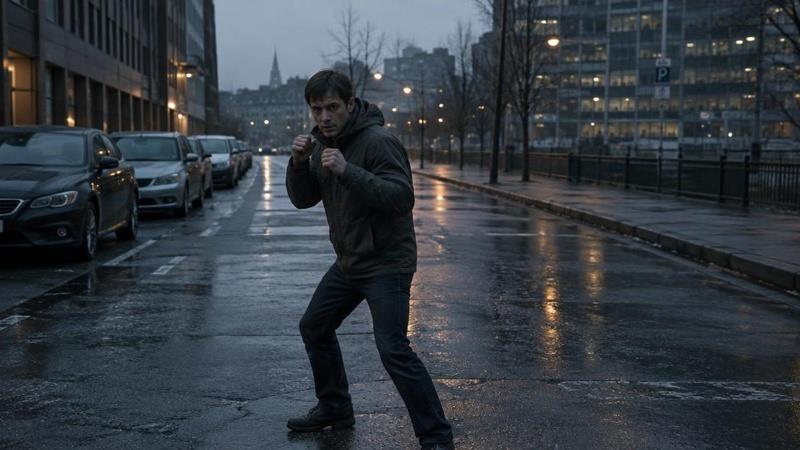
This subject needs a bit more space than I have here to give proper history, some context for how training is given, and the typical safety considerations that need to be taken into account for discussion of this kind. In the meantime, what follows is a hopefully useful primer on the basics of self-defense. It is not a course and is meant to be read with the understanding that proper self-defense training, as with any skill, needs to be given by a qualified and experienced instructor in a safe and controlled environment.
The original field note
The fight you avoid is the fight you win. By training self-defense, you are training awareness, which is the main discipline that allows for avoidance of a potential fight.
The baseline check
Soldiers on patrol go on constant patrol, notice who is there, what is normal for the place and what has changed. It can take 3 seconds to go through this mental check list when entering a cafe for example.
Train it deliberately. Walk into a café and note the possible exits, note who is watching the door. Practice it until it becomes boring. Boring is the goal.
Attention is a skill. Most people spend it on a phone at exactly the moment it would be worth the most.
Reading intent
Predatory behavior typically follows a pattern and in many cases there is no need for actual proof. An approach without a clear purpose, a question designed to bring the other closer, or a hand that is hidden from sight are all reasons to leave quickly.
You don’t need to be 100% sure of something happening before you take action to avoid it. Looking rude for 10 seconds is worse than being rude for 10 seconds.
Awareness begins before contact
When considering training in practical self-defense, remember that these skills are developed and executed through the ordinary tasks of movement and observation. Hence, students must learn to notice exits, maintain appropriate space between themselves and others, recognize escalating behavior, and depart the scene prior to physical contact.
Communication can create an exit
Speaking, open palms and a clear boundary can be enough to prevent a problem. Be aware of your intentions and make them clear. Speaking can draw attention to yourself and give you time to leave. Practicing scenarios that include speaking and leaving is as important as practicing physical techniques to defend yourself.
Legal and medical consequences matter
Even a very short physical encounter can lead to serious injury, police intervention and lengthy uncertainty. Training programs that are responsible contain lessons on the appropriate level of force, local law, first aid and reporting incidents. Note that advice on a web site is never as good as instruction from a qualified, experienced teacher who has a good understanding of his or her student and the local jurisdiction.
Start with context
This article is titled “Military Training for Self Defense” so naturally one would assume that reading the article would suffice to learn how to defend oneself. But in reality, Military training for self defense is shaped by so much more than just mission. There are tools, teams and even a chain of command that would be totally foreign to most civilians. So, it would be wise to consider most of the material to be mere rhetoric unless it is clearly indicated that it is being applied within a very specific context, ie within a unit or even better, a training program that is being supervised by a qualified and experienced instructor.
What a responsible instructor looks for
The most qualified instructors establish a clear purpose for a drill, set boundaries and watch for signs of fatigue. They teach students to perform a skill safely and correctly for speed, and provide new students with plenty of space to practice. The student learns confidence from knowing what he or she is supposed to do within the structure of a training program.
Keep the lesson practical
Instead of trying to copy some dramatic looking movement, even a single self-defense move, from a video clip, the interested person can go read up on local safety resources, compare training programs, go for a run, sign up for a recreational team sport, go for a bike ride, look for an instructor who offers live practice and find out how that instructor controls intensity and protects his/her students.
Limits are part of the lesson
Remember, no article on this subject can provide for you with the coaching, proper partner(s), and safety equipment and immediate correction to guide you in practice. So be mindful of your individual health, prior injury, and local laws regarding physical activity. Be conservative in your practice and seek out a proper, qualified instructor for a full training session.
A reader’s checklist
- What parts of the physical training will require the use of military hardware, a team of instructors or a specific training area?
- Posture, awareness, fitness and good decision making are far more valuable than novelty techniques.
- Ask how an instructor controls intensity and protects beginners.
- Stop the drill when the student's body indicates that continued practice will result in harm.
- Verify that local laws and military and civilian training standards will permit you to put the general information provided to practical use.
Closing perspective
“Situational Awareness: The First Line of Defense” should be read by civilians with the same sense of discipline as they would approach any other training program. That is, readers should verify the information in the article and training should be conducted in the most appropriate setting with the objective of improving in the safest manner possible and measuring that progress in terms of improved decision making as much as physical improvement.
Training note 1
Recording in your training journal what you have done in your session, plus the changes in the conditions and what correction had the most impact on you, will ensure you are able to refer back to this information and even discuss your progress with your instructor(s) later.
Training note 2
Comfortable training clothing, sufficient space for training and the use of suitable protection are far more important than a lot of additional “training equipment”. The training environment should never become a new danger that is then to be controlled by the student.
Training note 3
Much like our sessions that often improve one area of your training while exposing a weakness in another (your base, your timing, your decision making etc), helping you to then focus on fixing that specific area before increasing intensity in training.
Training note 4
A training journal is also useful to record the purposes of the sessions, the changes of the conditions and the most effective correction for any aspect of the student’s training. The student and his/her instructor can then refer back to this to see how much progress the student has made in his/her training.
Training note 5
It also means students can train with appropriate, protective equipment in a comfortable, spacious, safe environment to practice their movements in quality training sessions that enhance their learning experience.