In my previous post I attempted to summarize a large subject and then went on to discuss in greater depth a particular aspect of self-defense. In that summary I said that a good self-defense course would help students to change their method of movement, to change their method of scanning and to make a quicker decision as to whether or not to leave a situation. In the ensuing discussion, I attempted to add more depth to that summary with historical context, training discussion, safety issues and even a few notes from a lay person's perspective. I hope that the resulting discussion is of use, and that it does not serve as a substitute for appropriate instruction or advice.
The original field note
Most people go into a self-defense class expecting to learn to fight and by the end of the class realize that the real value of the training is that it helps you to have a better sense of what danger looks like before it becomes physical.
Confidence that is actually earned
The confidence gained from a 2 hour seminar is fragile and can easily be crushed by any hostile stranger. Confidence gained from training under pressure, failing at drills while other people watch, and realizing that what worked for you in the past may not work for you in the future is extremely durable.
You are not training to feel brave. You are training to recognize the situations in which being brave is not required because there is already a way out.
You also train the core strength of your body for grip, posture, getting up from the ground and staying calm when someone is trying to grab clothing etc. for you.
Knowing how to tell someone to leave you alone using your words is far more effective at deterring an attacker than any throw. Using your “words” to tell someone to leave you alone, using your “hands” up to tell someone to leave you alone, are two of the most powerful techniques for preventing and deterring an attack.
How to choose
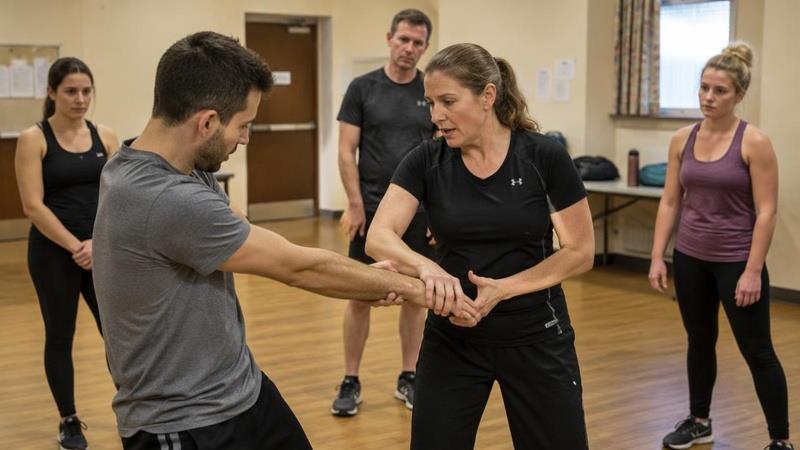
In search of the perfect self-defense course look for a small student body, live resistance training, and the sober account of the legal consequences of physical actions. Refrain from courses promising you 100% of success in any given situation, as in reality self-defense is all about probabilities and the responsible teacher will, when asked, outline these to you in due detail.
Awareness begins before contact
In practical terms for developing good awareness, the typical exit routes, distances between yourself and other people, people’s intentions to harm you etc. All are best determined in a realistic and safe way by looking at how you normally react in everyday life, and then establishing a few easy to apply rules.
Communication can create an exit
Speak in a clear voice. Use open and alert postures. Express clear boundaries without being abusive. Remember, in most scenarios you are trying to get the other person’s attention, to make them aware of your intentions, and to leave with time to spare. Developing techniques for speaking in scenario practice is as, or even more, important than practicing physical responses to scenarios.
Legal and medical consequences matter
Consider also the medical consequences of injury as well as the resulting investigation and subsequent ramifications into your life. Compare a responsible martial arts school to a responsible self-defense school: the former will focus on technique and forming part of a team whereas the latter is entirely concerned with helping you avoid the need to use any physical skills at all.
Start with context
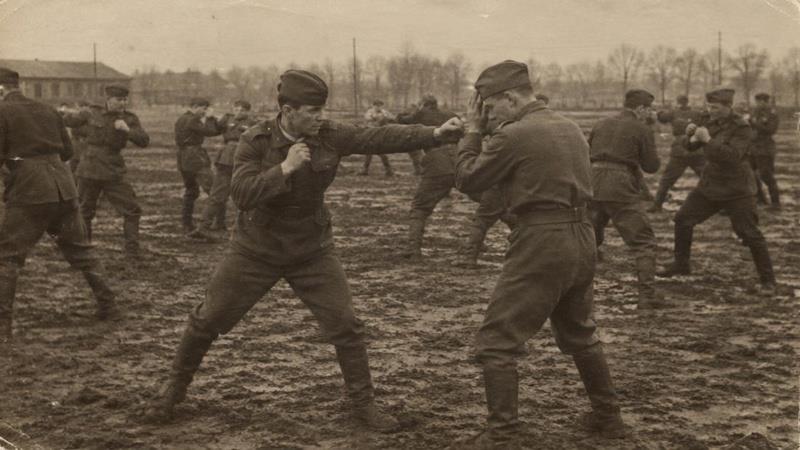
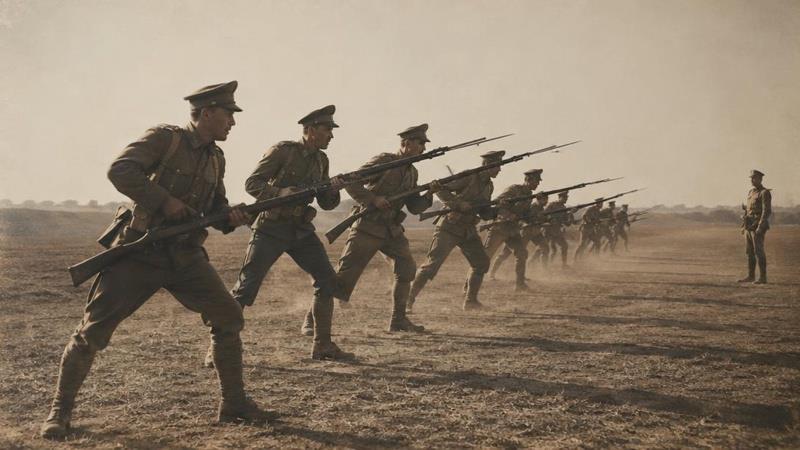
In this article we will refer to “military training for self-defense” and try to differentiate between very general self-defense training (which could be based on military training) and specific training within a unit. Most of this training is not suited for readers of this website and would even be very dangerous if practiced without proper supervision and facilities.
What a responsible instructor looks for
What to Look for in a Good Instructor. A good instructor makes clear the intent of a drill, sets limits for his students, and can see how they do in fatigued states. A good instructor corrects his students for traveling at too high of a speed, takes care of his new students so they are not put under too much pressure, and can explain how the skill that the student learned applies to the rest of the training program.
Keep the lesson practical
Use our self-defense article to start on your training! Rather than risking your safety by practicing unwise techniques in isolation, look for courses, increase your overall fitness, learn about local self-defense resources, ask an instructor how he or she structures a realistic and controlled live practice, and then note all of the things you actually learned. Start small and verify for yourself.
Limits are part of the lesson
Similarly, a reader needs to remember that no article can reproduce a coach, a proper partner, adequate equipment and personal supervision. The single most important element in any physical activity is an individual’s physical and medical health, including pre-existing injuries and localized laws. Articles of this nature are meant to serve as a proper and information-rich orientational tool only.
A reader’s checklist
- Identify which parts of the lesson are specific to a particular military piece of equipment, to working with a team, or to training in a specialized training facility.
- Favour techniques that develop posture, awareness, fitness and safe decision making over techniques that have not been proven in a practical, real world situation.
- Ask the instructor about the control of intensity and how he/she would deal with a beginners problem.
- Do not practice in a hazardous or damaging manner and stop practice if you suffer from injury, are confused or are fatigued and your practice becomes unsafe.
- Verify what local laws govern in terms of practice and when you can use information given in an article for planning a defense.
Closing perspective
“Self-Defense Courses” should encourage disciplined curiosity in potential students. Military training programs are improved through repetition, review, and a very strict set of standards. In the same vein, students of martial arts can benefit by taking the approach of cross-checking information and very strictly controlling the training environment in order to remain focused on the objective of improving in order to make safer decisions as well as improving physical performance.
Training note 1
Some of the best advice given to students is to write down what happened in class. The purpose of the session, what changed from previous practice and the one correction that had the greatest impact on their training. This way, they can go back to repractice what they were doing before and discuss their progress with their instructor.
Training note 2
Spare the extras and help your students focus on their practice with the simplest tools for the job. Good quality exercise clothing, practice space to roll around safely, protective equipment as needed and nothing else to distract them from the quality of their practice.
Training note 3
Note 3: Session are not always ascending in intensity. The focus of training is also to identify areas of weakness (e.g. new late decisions, poor base of support, etc) and then work to fix them prior to an increase in intensity.
Training note 4
A useful training journal will outline the purpose of the training, include notes on changes to training conditions and be able to reference back to specific corrections and how they had the greatest effect on the student’s development.